

When people ask me about our home visit program at the Judy Centers, I have to be transparent. We’ve hit a temporary pause. Lately, families have been reluctant to have visits in the home due to immigration enforcement concerns. Many families in some of our Judy Center communities are understandably cautious about opening their doors and are being extra careful about their privacy. As someone who has seen the power of home visits firsthand, that reality breaks my heart.
But let me tell you about the years when we could—and why I’m holding onto hope that we’ll return to this transformative work.
Finding Our Fit
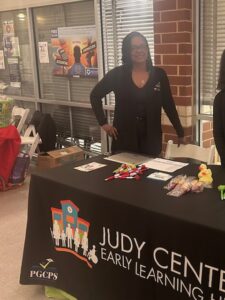 Our journey with Parent Teacher Home Visits began around 2019-2020 as a requirement for our Judy Center Early Learning Hubs. We needed a program recommended by the Maryland State Department of Education that aligned with our mission of building relationships with families and understanding their dreams for their children.
When we discovered the PTHV model, it felt like a perfect match. The core question—asking parents about their hopes and dreams for their child—resonated deeply with our comprehensive approach to school readiness. Whether families live in apartments or houses, whether they’re new to the country or have been here for generations, the answers are remarkably consistent: parents want their children to be successful, to go to college, to do better than they did.
These universal dreams align perfectly with our school system’s goals. Every parent, regardless of where they live or where they come from, shares this fundamental desire for their child’s success.
Making It Work in Our Community
We started with two Judy Center sites and eventually expanded to four schools, focusing specifically on our new pre-kindergarten families. This targeting made sense—these were families we already had relationships with through our summer programs and playgroups, some since their children’s birth.
Our pre-K teachers embraced the practice readily, especially those with Head Start experience who understood the value of meeting families in their home settings. The connection was natural: they already knew that relationship-building was essential to their work.
We structured it as a team effort. Two teachers would engage at each site, and often one of our trained Judy Center staff members would accompany them. This approach helped everyone feel more comfortable and confident.
The Magic of Connection
The impact was immediate and profound. Children couldn’t stop talking about the visits: “You came to my house! You ate at my house, you drank some water at my house, you saw my pet, you saw my dog, you saw my baby sister!” These excited declarations became a constant refrain in our classrooms.
But the real transformation happened with the adults. Teachers would report back with amazement: “That was impactful. Families really have goals, additional dreams for their children. It’s good to know that Family A wants the same thing as my family.”
The relationship-building was remarkable. Teachers would tell me, “I’ve got a really good relationship with this parent as a result of the visit. I know I can call this mom, and she’s comfortable that I’m transparent, and that I really have the best interest of her child based on that visit.”
Parents became more comfortable coming to school, more willing to communicate with teachers. That memory of the teacher sitting in their living room, asking about their dreams, created a foundation of trust that lasted throughout the school year.
Overcoming the Challenges
I’ll be honest about the challenges. Some staff members were concerned about visiting neighborhoods they didn’t know, wondering about safety and what they might encounter in families’ homes. These are real concerns that deserve real responses.
We addressed these worries head-on. Following PTHV guidelines, we ensured no one went alone. We gave families and staff permission to say no if conditions didn’t feel right. We asked families directly: “Is it comfortable for you to have us come? Is it safe to walk and visit?”
Fortunately, we never had reports of staff feeling they couldn’t enter a family’s home. When visits were canceled, it was usually due to family emergencies or teacher scheduling conflicts—normal life circumstances, not safety concerns.
The training and our community-based approach helped. Because we were already working with these families and one of our trained staff often accompanied teachers, the nervousness that might typically arise was minimized.
The Investment That Pays Off
Districts considering home visits often ask about the financial investment. We compensated teachers fairly for their time—calculating roughly two hours per child when you factor in the visit itself, travel, and follow-up paperwork. A teacher helped us develop that formula, and it worked well.
The compensation is important. We’re asking teachers to take on an extra task during the busy start of school, working beyond contract hours. They should be paid for that commitment, even if the amount isn’t substantial.
What we received in return was immeasurable: stronger relationships, more comfortable families, children who felt truly known by their teachers.
Lessons Learned
If I could do anything differently, I would push for visits to happen before school starts—in August rather than late September or early October. Having that relationship established before any challenges arise would be incredibly valuable for both teachers and families.
To other districts considering this work, I’d say: we had a very positive experience with this model. It was easy to get buy-in from teachers and school leaders. Families felt comfortable because we didn’t arrive with clipboards and forms—just genuine curiosity about their hopes and dreams.
If you need to bridge the gap between school and community, if you want to build authentic relationships with families, this program absolutely allows you to do that.
When Trust Becomes Complicated
This year taught us that even the most valuable practices can be affected by larger social realities. The assault on Black and Brown people in our communities, particularly in our area, created an atmosphere where families and staff didn’t feel safe. Parents started to question: “I don’t know if you’re coming with someone else to my house.” Ours is a practice whose bedrock is building trust, so we couldn’t proceed when trust itself was under attack. It was unfortunate but necessary to pause.
Looking Forward with Hope
My hope for our Judy Center Learning Hubs is that we can continue this model to support students entering pre-K. At minimum, this practice serves well as an entrance point into school. I could envision it working beautifully for other transition points too—new sixth graders entering middle school, for instance.
I want to be able to talk to the state about continuing this program. Of course, we need teacher buy-in, because they’re the ones building those crucial relationships with students. But I believe in this work.
Even in a year when we couldn’t visit homes, I carry the memories of children excitedly telling their teachers, “You came to my house!” I hold onto the knowledge that somewhere, a parent still remembers the teacher who sat in their living room and asked about their dreams.
Those connections don’t disappear just because the world gets complicated. They become even more important—reminders of what’s possible when we choose to see each other fully, when we’re willing to step into each other’s spaces with genuine respect and curiosity.
That’s why I’m not giving up on home visits. That’s why, when we can, we’ll be ready to return to this work. Because every child deserves teachers who know their families’ dreams, and every family deserves to feel truly welcomed into their child’s educational journey.
The work of building trust is never finished. Sometimes it’s harder than others. But it’s always worth doing.
 Andrea Hall is Supervisor of Judy Center Early Learning Hubs in Prince George’s County Public Schools.
