
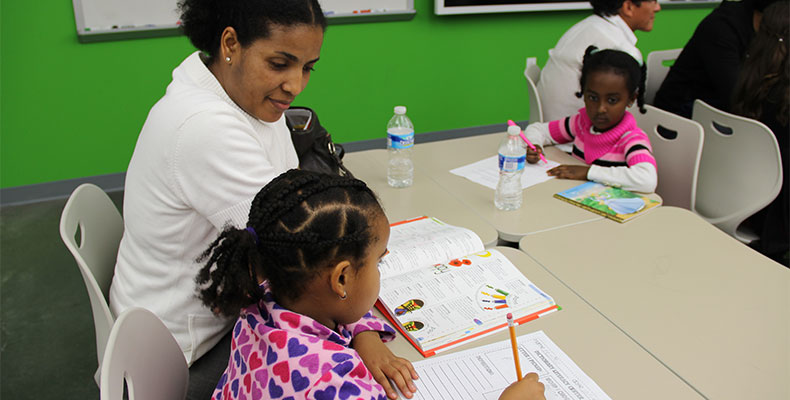
From ‘Taco Night’ to Transformation – How Home Visits Ignite Deep Learning and Community Connection

From "Taco Night" to Transformation – How Home Visits Ignite Deep Learning and Community Connection

This week, I came across a research brief from Towson University’s Maryland Center for Community Schools that stopped me in my tracks. Titled “What Does the Community School Classroom Look Like? A Systematic Literature Review of Teaching and Learning in Community Schools,” the brief identifies five key themes in the literature on community schools:
  • Deep and interdisciplinary
  • Whole child, healing-aligned, and relationship-centered
  • Student-driven and democratic
  • Culturally and linguistically sustaining
  • Community-based learning
Reading through these themes, I felt a familiar spark of recognition. These aren’t just aspirations for community schools—they’re the natural outcomes when educators and families build authentic, trust-based relationships. And that’s exactly what Parent Teacher Home Visits make possible. The Missing Piece in Community Schools For decades, community schools have been celebrated for their wraparound supports: dental clinics on high school campuses, food pantries, wellness checks. These are vital, and they draw attention to the model. And communities rally around them. These visible supports are only part of what makes a community school truly transformative. What often gets overlooked is the harder, less flashy work: connecting wraparound services to teaching practice and building genuinely authentic relationships with families. Not the traditional “taco night” approach, but relationships where families have real voice, real agency, and real partnership in their children’s education. During a recent conversation with our team, I reflected on what’s often been an unspoken truth in the community schools movement: traditional, haphazard family engagement efforts are not moving the needle. It’s not the kind of engagement that levels the playing field and involves families having an authentic say in what’s happening in schools. And they don’t help teachers reimagine their classrooms in more equitable ways. From Low Expectations to High Possibility Here’s where the conversation gets uncomfortable but necessary. In many schools—particularly those serving communities that have been historically marginalized—teaching can default to low-level, rote, memorization-based instruction. Not because teachers don’t care, but because they’re operating within systems and mindsets that quietly lower expectations for certain students.  And when expectations are lowered, opportunities shrink – and children feel it. But this isn’t about blame. It’s about opportunity: creating ways for educators to see students differently, to recognize the brilliance that’s already there, and to teach with renewed imagination and purpose. That’s where home visits come in. How Home Visits Transform Teaching Practice When teachers conduct relational home visits—visiting families’ homes to learn about their students’ strengths, interests, hopes, and dreams—something profound happens. Students become more than data points not as demographic categories or test scores—they become whole people with rich family lives, cultural knowledge, and untapped potential. This shift changes teaching. Teachers rethink:
  • What activities they design
  • What they teach and how they teach it
  • What questions they ask and who they call on
  • How they respond to behavior
  • What they believe is possible
You cannot fake this work. You cannot get these insights from a data dashboard or a brief parent-teacher conference. You get it by showing up – with humility, curiosity, and genuine care. The Community Schools Connection During our recent PTHV Week webinar, co-hosted with MAEC’s Collaborative Action for Family Engagement (CAFE), we explored exactly this connection between home visits and the community schools framework. Leaders from California to Maryland shared how relational practices empower families, fuel educator morale, and create a culture of shared responsibility. National organizations, like the Institute for Educational Leadership and the National Education Association, have long advocated for community schools to move beyond traditional family engagement structures toward authentic committees where families and community members help guide school decisions. But you can’t co-create school improvement without trust. And you can’t build trust through email blasts or sign-up sheets. You build it by seeing families, listening deeply, and partnering authentically. Relational home visits strengthen teaching and learning and provide the foundation for everything else community schools aim to accomplish. They make needs assessments more accurate and responsive. They strengthen the teaching and learning pillar that community schools have historically struggled to address. They bring the Towson brief’s five themes to life—deep learning, whole-child focus, student voice, cultural responsiveness, and community connection. The Path Forward Community schools are at their best when they partner with families, not just serve them. When teachers inspire curiosity, not just manage behavior. When schools become true community hubs, not just buildings in neighborhoods. Parent Teacher Home Visits aren’t a program to add to an already overwhelming list. They’re a practice that makes everything else work better. They’re the connective tissue between the community schools’ pillars. They’re how we move from aspiration to reality. As I read through that Towson brief, I kept thinking: every one of these themes depends on relationships. And relationships depend on trust. And trust depends on showing up—in families’ homes, on their terms, with genuine curiosity and respect. That’s not the easiest work. It’s not the work that makes headlines. But it’s the work that changes lives, transforms classrooms, and makes community schools everything they promise to be. Want to bring Parent Teacher Home Visits to your community school or district? We’d love to support your journey. Email us at info@pthvp.org or explore our training opportunities. Working in a community school? We want to hear from you. Share your story at news@pthvp.org.

Andrea PrejeanAndrea Prejean is Executive Director of Parent Teacher Home Visits.
PTHV advances student success and school improvement by leveraging relationships, research, and a national network of partners to advance evidence-based practices in relational home visits within a comprehensive family engagement strategy.

Contact

10265 Rockingham Dr., Ste 100 PMB 6021 Sacramento, CA 95827

Support

PTHV is a nonprofit grassroots network that must raise its operating budget every year. Like the local home visit projects we help, our network is sustained by collaboration.

© Copyright 2026 by Parent Teacher Home Visits