
When Alba Morales first learned about Parent Teacher Home Visits at a national conference, she instantly recognized all the possibilities it could unlock. She went back to her district, Anne Arundel County Public Schools in Maryland, knocked on her chief equity officer’s door, and told her she had an idea for dramatically changing the relationship between home and school.
Dr. Maisha Gillins, to her credit, did not immediately say yes. She assigned homework. Who are these people? What does the research say? What does it cost? What would it take to do it right? Alba did the work. She came back with answers. And in the fall of 2025, Anne Arundel County launched a pilot of PTHV across eight schools that quietly became one of the most joyful things I have witnessed in my time leading this organization.
I had the privilege of attending their end-of-year celebration this month. What I saw and experienced there left a lasting impression on me and my belief in one person’s belief and persistence to create real change.
 A Small Celebration, A Big Impact
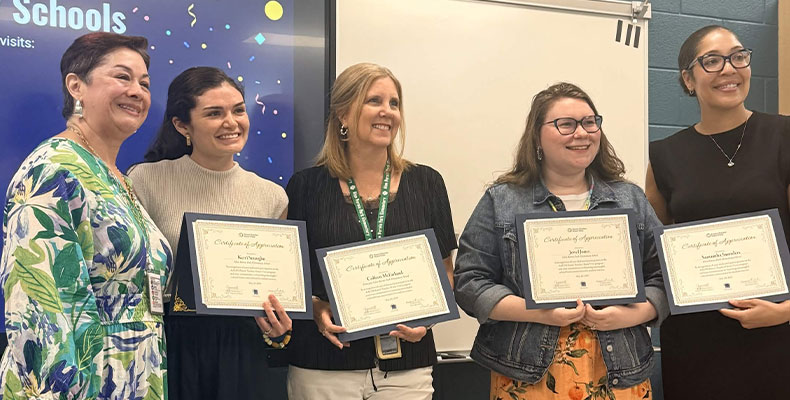
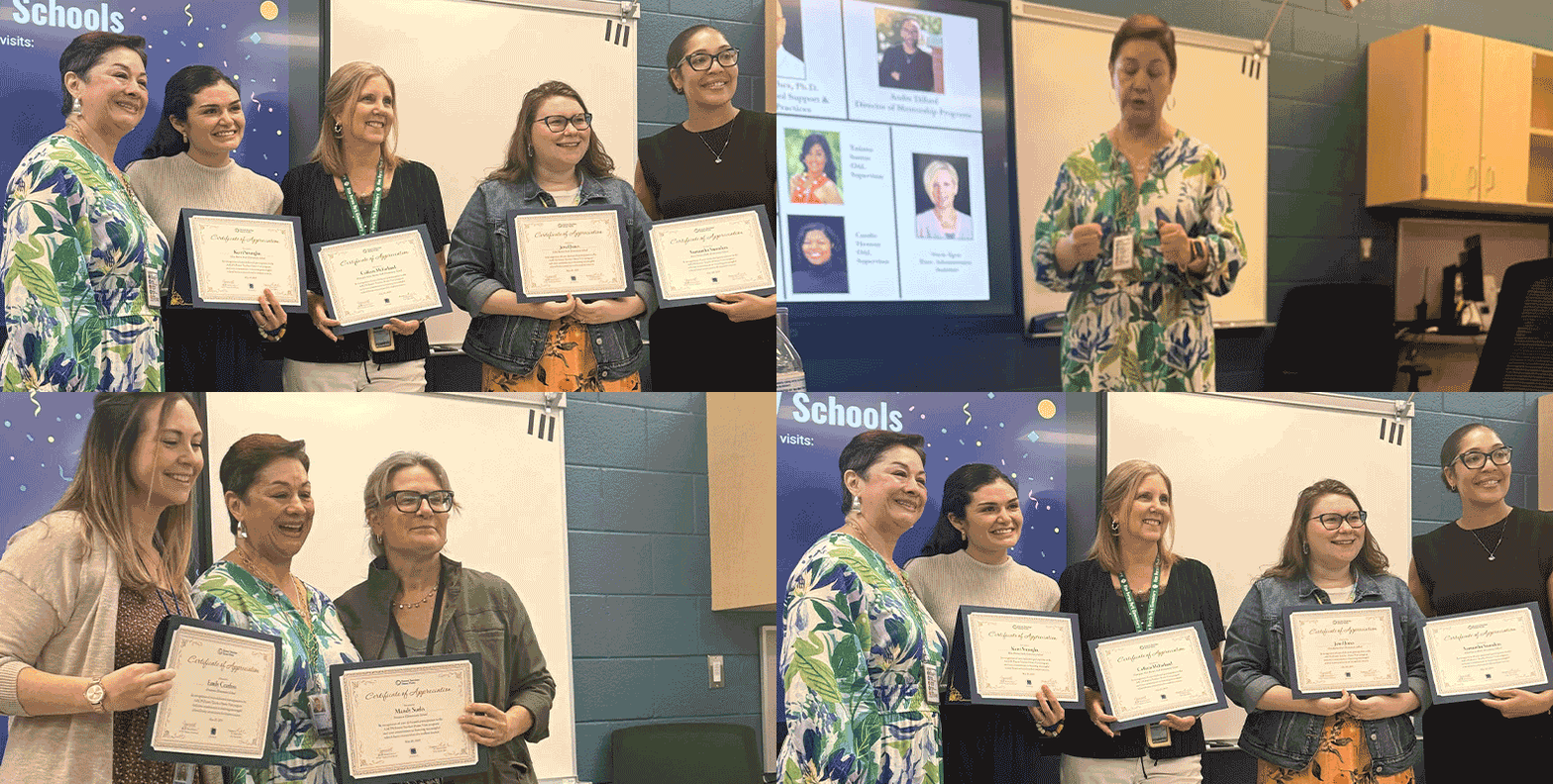
About 20 educators, social workers, principals, and community partners gathered on a weekday morning for what Alba had organized as a simple celebration: some yogurt and croissants, a short slideshow of photos from the year, certificates for everyone who had made visits—all 62 of them—and two reflection questions that she asked the group to answer together, out loud.
The first: what assumptions did you hold about a specific family before your visit, and how did your perspective shift afterward? The second: for the families you struggled to reach or who declined a visit, what barriers did you uncover, and how might you communicate differently next time?
The responses were unforgettable.
“In the past, every phone call we made was about a problem. This was different. It felt different.”
Those words came from educators at an alternative school whose students come from across the county, students who carry complicated histories and often arrive each day with walls already built up. These teachers had made visits. And they were describing a powerful shift they’d never experienced before in their careers.
The Quiet Student Who Finally Talked
One first-grade teacher stayed with me. She had taught the same quiet boy in kindergarten and again in first grade. After nearly two years together, she assumed, reasonably so, that she knew him, and that his mother, given how reserved he was, would be similarly hard to reach.
She was wrong.
The mother who opened the door and welcomed her in was warm, talkative, funny, and full of stories. The teacher left that visit understanding her student in a way two years of school had not produced, especially the quiet that now made a different kind of sense, in a home where the stories and the joy were already spilling generously into the room. And yet, after the visit, the student started talking more in class. He said hello to his teacher in the hallway. It was the littlest things like that, that made an enormous difference in how she taught him.
It hearkened back to the celebration, when Dr. Gillins shared Chimamanda Ngozi Adichie’s TED talk on the danger of a single story in the reflection session, everyone in the room knew exactly what she meant. They had lived it in moments like that one.
The Work of Getting There
None of this was accidental. Alba coordinated the pilot while also serving as interpreter for teachers making visits to Spanish-speaking families, supported by a phone-based translation service called Language Link that covers 158 languages. She recruited families, organized the training, tracked who was participating and how, and still found time to plan a celebration that made educators feel seen.
Some teachers brought food to the visits. Families fed them back. That detail sounds small. But anyone who has done this work knows what it means when a family sets out food for a visitor. It means they feel safe enough to host. The educator is being welcomed into an intimate space and honored with what families wanted to share.
Families who said yes early helped spread the word to families who were hesitant. Parents who received visits became, without being asked, advocates for the practice in their school communities.
Getting the Pilot Off the Ground
The Anne Arundel pilot was not perfect. There were barriers. Some families declined. Some teachers started their visits late in the year, close enough to summer that parents reasonably asked why they were showing up now. One thing that emerged clearly was that visits are most powerful when the classroom teacher goes because families want to talk to the person who sees their child every day. That is a fidelity question the district is taking seriously as they plan to expand next year.
And expand they will. Alba is already planning a dinner to replace the morning gathering so that more educators and families can attend and to have more room for the kind of reflection that happened in this first celebration.
The educators also want the evidence in hand as they make the case to expand to more schools. That evidence matters. Research on systematic home visit implementation shows that students in participating schools are more likely to score proficient in English and math and less likely to be chronically absent. But I also think what happened in Anne Arundel County this year does not fully live in a research brief. It lives in the first-grade teacher who finally knows the quiet boy and can reach him in different ways. In the educators at the alternative school who picked up the phone for the first time to share good news instead of a problem. In Alba, who heard about a model at a conference and simply refused to let it stay theoretical.
“What are your hopes and dreams for your child?” That is still the first question. It has always been the first question. And it still opens every door.”
This is what we are building, one community at a time. We are grateful to Anne Arundel County for showing us what a first year can look like when someone believes, organizes, and brings others along. Here’s to many more.
Interested in bringing PTHV to your district? Contact us at info@pthvp.org or visit pthvp.org/training-and-services.
 Andrea Prejean is Executive Director of Parent Teacher Home Visits.
